Ma pesa que nunca
2001 · Album · 9 tracks
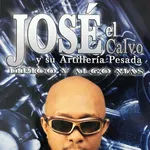
José El Calvo —born José Alberto Cabrera Bonilla in Imbert, Puerto Plata, on 11 February 1956— is a Dominican saxophonist, composer and arranger who leads the merengue típico group «José El Calvo y su Artillería Pesada».
From the tambora to the saxophone
He began as a percussionist in his hometown, playing tambora in the orchestra «Los Príncipes de Imbert», and then studied music and moved to the saxophone. His first professional work as a saxophonist was in the típico groups of Facundo Peña and «Los Hermanos Cruz». In 1978 he joined the group of Bartolo Alvarado, known as El Cieguito de Nagua, and stayed about fifteen years, which he remembers as his school.
The sideman
Alongside his own group he became one of the most recorded saxophonists in the genre; by his own count he has played on more than 400 típico merengues by other artists. Over a hundred of them were with El Cieguito de Nagua. Others include a live album by Fefita la Grande, the whole of «La Grama Chapiá» by Raquel Arias, «Apriétame así» by La India Canela, four productions by María Díaz and four by Toribio de la Cruz, and recordings with Francisco Ulloa, Ciano Arias, King de la Rosa and El Negrito Figueroa. He also played for Rafaelito Román, and outside típico he recorded with Héctor Acosta “El Torito” and Alex Bueno and, with the singer Marcel, «Vamo hablar Inglés».
«Artillería Pesada»
When El Cieguito de Nagua paused his career in 1992, José El Calvo formed his own group. He went to Puerto Plata to recruit Pedrito Reynoso and other musicians from his hometown, and put a saxophonist at the head of a genre whose bandleaders are usually accordionists. By 2021 he had recorded twelve albums, beginning with «La Parcela», which contains «Pa’ to perdió», the song he calls his flagship. His distributor’s biography places nine of them with «Allegro Producción», where «El Picoteao» and «La Samaritana» were among his hits, and three with «Juan y Nelson Records», linked to Sony.
What he says he changed
He credits himself with two innovations in típico. During his fifteen years in that group the musicians played seated, and he persuaded his leader to have them play standing, a practice the other groups then adopted. He also says he arranged the saxophone and the accordion to play a melody in unison, a duet that, in his words, every group now uses.
Recognition
His own biography and a cultural society’s profile both credit him with Casandra awards for típico groups in 1996, 1997, 1998 and 1999; they differ on other years, and no official list for those editions is available online.
Legacy
In a 2021 interview he said he was choosing ten songs for his next production, and his YouTube channel has since published a series of «Retro» compilations, a tribute to El Cieguito de Nagua and recent recordings with Narciso “El Pavarotti” and Pedrito Reynoso. The same cultural society describes him as a reference for saxophonists in típico music.
2001 · Album · 9 tracks
2002 · Album · 12 tracks
2005 · Album · 10 tracks