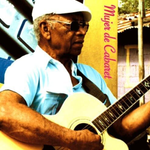
Mujer de Cabaret
2007 · Album · 11 tracks
Puerto Plata — José Manuel Cobles, born 4 August 1923 in San Felipe de Puerto Plata, died 4 January 2020 — was a Dominican singer and guitarist, one of the last musicians of the older, guitar-based popular style that fed directly into what later became bachata.
A trade instead of an instrument
He came from a musical family and, as a child, had contact with Juan Lockward and Eduardo Brito, but his own interest in music went unpursued for years: at sixteen, after his mother’s death, he was raised by his grandmother until her own death forced him to find work as a carpenter for the United Fruit Company.
A guitar at twenty-four
He bought his first guitar at twenty-four in Manzanillo, where he lived for some years before moving on to Panama. Three years later, at twenty-seven, he settled in the poor La Joya district of Santiago de los Caballeros, where the nickname of his home city stuck to him for good. Around La Joya’s clubs and brothels he fell in with the musicians Daniel Rodríguez and the guitarist Ernesto Sanabria Almonte, with whom he formed the Trío Primavera, later known simply as Trío Puerto Plata; after Rodríguez’s death he played solo at El Arbolito, a Santiago cabaret.
Playing through the Trujillo years
Under Rafael Leónidas Trujillo, guitar-based popular music went largely unrecorded: the dictator favored the accordion-driven merengue típico, and the guitar songs of the poorer classes were looked down on by those above them. Puerto Plata was one of the few musicians who kept working through those decades, before the style that grew out of those same guitars, after Trujillo’s 1961 assassination, came to be called bachata.
A discovery past eighty
He was in his eighties and retired when the producer Benjamín de Menil found him while recording original Dominican guitar musicians of the 1960s through 1980s for his label, iASO Records. His debut international album, «Mujer de Cabaret» (2007) — recorded with the guitarists Edilio Paredes and Frank Méndez, drawing on son, bolero and merengue — came out when he was eighty-four, and he went on to play US festivals including the World Music Festival Chicago and the Madison World Music Festival. Menil then produced «Bachata Roja» (2008), a live compilation that gathered him alongside Eladio Romero Santos, Leonardo Paniagua, Edilio Paredes again and Augusto Santos, presented at the Queens Theatre in the Park in New York; «Casita de campo» followed in 2009, recorded live in New York, and National Geographic named it one of the year’s ten best albums.
Legacy
He wrote as well as sang — «Los Piratas», his response to the September 11 attacks, followed the old merengue habit of setting the news to song — and by the time he died in 2020, at ninety-six, he had toured Colorado, Texas, New Mexico and Belgium in his eighties and nineties, carrying a guitar style shaped in Santiago’s poorest clubs decades before anyone called it bachata.
2007 · Album · 11 tracks
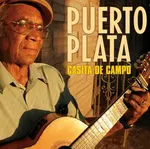
2009 · Album · 11 tracks