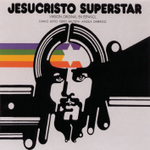
Jesucristo Superstar
1975 · Album · 25 tracks
Ángela Carrasco, born Ángela Altagracia Carrasco Rodríguez on January 23, 1951 in Pepillo Salcedo, Montecristi, is a Dominican singer and actress and one of the most internationally recognized voices the country has produced. She built her career almost entirely abroad — in Spain first, then the United States — moving from musical theatre to the Spanish-language ballad and finally to tropical pop, and collecting along the way a Latin Grammy for Musical Excellence and the Gran Soberano, the highest honor Dominican arts confers.
Early years in the Dominican Republic
Carrasco came from Pepillo Salcedo, a small town in the northwestern province of Montecristi on the Haitian border. She was performing in public at seven, singing a beverage jingle written by the Dominican composer Salvador Sturla. As a teenager she taught guitar alongside her sisters at a local music school, and by around fifteen she had moved in front of the camera, hosting the television programs Órbita and Cascada de éxitos. A scholarship took her to Spain, and the move turned out to be permanent in every way that mattered to her career.
Spain and Jesucristo Superstar
She surfaced first on Spanish television, appearing on the variety show ¡Señoras y señores! across 1974 and 1975. The break came in 1975, when she was cast as María Magdalena in the Spanish-language production of Jesucristo Superstar, adapted and directed by Camilo Sesto, who also played Jesus. Her reading of «No sé cómo amarlo» — the Spanish «I Don’t Know How to Love Him» — put her in front of an audience across the entire Spanish-speaking world at once, and it remains the performance that opened everything else.
The Camilo Sesto years
Sesto became her producer and principal songwriter, and the partnership defined her late 1970s and early 1980s. He wrote and produced «Amigo mío, cuenta conmigo» (1978) and «Quererte a ti» (1979), along with «Cariño mío», «No, no hay nadie más», «Quiéreme» and «Mamma». Their duet «Callados» was the biggest record either of them made together, and the two toured the Americas as what the press of the period called the most famous duo in Spanish-language music, playing Madison Square Garden among many other rooms. She kept recording steadily through the decade, including Con amor in 1981 and La dama del Caribe in 1985.
The tropical turn
In 1987 Carrasco moved to the United States and changed register, trading the orchestral ballad for tropical arrangements. It worked immediately: «Boca rosa» reached number one on the Billboard Hot Latin Tracks chart in late 1988, and the album of the same name topped the Latin Pop Albums chart that year. Piel canela followed in 1992, and Candela paired her with Celia Cruz on a duet that became one of the better-remembered tracks of her later catalog. The reinvention brought her recognition in a category she had not previously competed in — tropical — which is unusual for a singer who arrived by way of musical theatre.
Recognition
Her career has been honored on both sides of the Atlantic:
Lo Nuestro Award, Tropical Female Artist of the Year, 1993,
a special Casandra Award in 2009,
the Latin Grammy Award for Musical Excellence in 2015, awarded alongside Ana Belén, Víctor Manuel and Pablo Milanés,
and the Gran Soberano in 2024, at the 39th Premios Soberano — the top lifetime honor in Dominican arts.
She has continued to record and perform, releasing the album El y yo in 2019 and touring with the Mexican production Grandiosas, and she directs ABC Estudio in Madrid, where she trains performers for musical theatre — the form that gave her a career in the first place.
Legacy
Carrasco is the Dominican artist who succeeded most completely in the Spanish market, at a time when the traffic ran overwhelmingly the other way and Dominican performers who wanted an international career were expected to go through merengue. She went through Madrid and a rock opera instead, and became a fixture of the Spanish-language ballad before ever recording anything tropical.
That trajectory makes her difficult to file and easy to underrate at home: much of her best-known work is not Dominican music in any stylistic sense. What it is, unambiguously, is the work of a Dominican artist who reached an audience across two continents and sustained it for five decades — which is why the Gran Soberano in 2024 read less as a discovery than as a debt being settled.
1975 · Album · 25 tracks
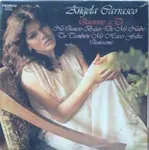
1979 · Album · 10 tracks
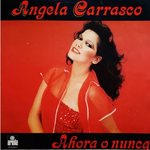
1980 · Album · 10 tracks
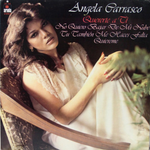
1980 · Album · 9 tracks
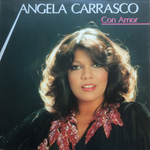
1981 · Album · 10 tracks
1983 · Album · 10 tracks
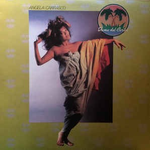
1985 · Album · 8 tracks
1986 · Album · 9 tracks
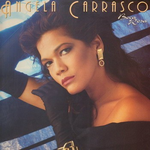
1988 · Album · 10 tracks
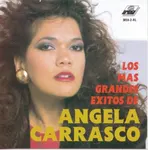
1988 · Album · 15 tracks

1992 · Album · 10 tracks
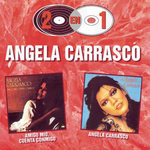
1997 · Album · 19 tracks
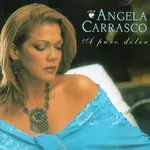
2000 · Album · 12 tracks
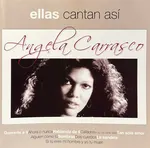
2003 · Album · 19 tracks
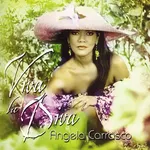
2003 · Album · 18 tracks
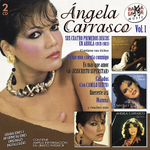
2009 · Album · 40 tracks
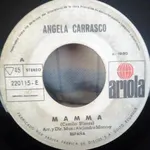
1980 · Single · 2 tracks