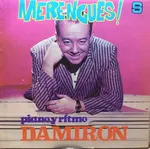
Biography
Damirón — born Francisco Alberto Simó Damirón on 21 November 1908 in San Francisco de Macorís, died 3 April 1992 in Santo Domingo — was a Dominican pianist, composer and arranger, and half of Damirón y Chapuseaux, the duo credited with helping carry Dominican merengue across Latin America and the Caribbean.
A mother’s surname
His parents were Teodoro Simó Knipping and Mercedes Damirón — the name he performed under all his life was his mother’s. He trained under Sixto Brea in theory and solfège and Rafael Pimentel in harmony and composition, and set himself early to spreading his country’s traditional music beyond its borders.
Damirón y Chapuseaux
He partnered early with the singer José Ernesto Chapuseaux, known as Negrito Chapuseaux, his first vocalist. With güiro, two-headed tambora, bass, voice and piano they formed a típico ensemble and quickly found an audience.
Billo’s Happy Boys, Panama, Puerto Rico
In 1937 Damirón and Chapuseaux helped found the orchestra Billo’s Happy Boys, forerunner of what became Billo’s Caracas Boys, backing the young Dominican bandleader Billo Frómeta as he built his career in Venezuela. From there the pair moved on to Panama, where they met the singer Silvia De Grasse and formed the trio Los Alegres Tres, adding Panamanian tambora rhythm to their Dominican repertoire and appearing on Panamanian television. De Grasse and Chapuseaux later married and settled in Puerto Rico; Damirón and his family followed.
The piano-merengue
As a soloist, backed by típico ensembles or full orchestras, Damirón built a repertoire that ranged across the Caribbean songbook — "Piano merengue", "El ají caribe", "La escalerita", "Que siga la fiesta", "Tucurucutú", "Papá Montero" and "Mecanógrafa" among dozens of others — and set outside standards to merengue rhythm, including "Last Tango", "Popcorn", "Hava Nagila" and "Love Story". He toured Colombia, Puerto Rico, Panama, Cuba, Mexico, Venezuela, Costa Rica and the United States, sharing stages with Harry Belafonte, Agustín Lara, Frank Sinatra, Libertad Lamarque and Nat "King" Cole, and recorded more than sixty LPs for labels including RCA, Ansonia, Seeco, Montilla and MGM.
Legacy
He married the Argentine Adelina Leiva, with whom he had a son, Frankie Simó Leiva, and lived for years in Puerto Rico before returning to the Dominican Republic, where he died in 1992 at eighty-three, closing a career of nearly five decades that carried the piano-driven, acoustic merengue of his youth in San Francisco de Macorís to stages across the hemisphere.
Discography
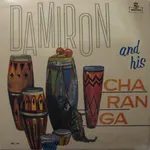
Damiron and His Charanga
1961 · Album · 12 tracks
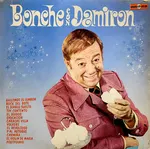
Salsa con Damirón
1970 · Album · 11 tracks
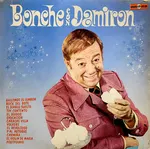
Bonche con Damirón
1975 · Album · 12 tracks

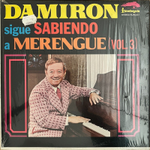
Sigue sabiendo a merengue vol. 3
1995 · Album · 12 tracks