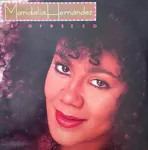
Te ofrezco
1992 · Album · 8 tracks
Maridalia Hernández Morel, born on 19 August 1959 in Santo Domingo, is a Dominican singer who grew up in Santiago de los Caballeros. She was a founding voice of Grupo 440 and built a solo career that includes the 1986 Viña del Mar international song prize, a third-place finish at the 1989 OTI festival, and recordings of ballads and boleros.
A musical upbringing in Santiago
Music ran through both sides of her family. Her grandfather was the composer Julio Alberto Hernández; her father, Julio Alejandro Hernández, studied piano; and her mother, Matilde Josefina Morel, sang. She began formal lessons in Santiago at the Liceo Musical José Ovidio García, then studied piano at the Academia Dominicana de Música and cello and classical voice at the Conservatorio Nacional. She sang as a soloist with the Coro Nacional and later instructed its sopranos.
At a school performance she sang with Jorge Taveras accompanying her. Her first professional appearance came in 1976 at «Casa de Teatro» in «Encuentro de Seres Humanos», at the invitation of Luis Díaz and Claudio Cohén. Luis José Mella then cast her in the 1981 stage production «Sonido para una imagen». She had been preparing to continue classical piano studies in Vienna, but the show helped turn her attention toward popular singing.
The original 4.40 quartet
She met Juan Luis Guerra while they were studying cello and bought her first cello from him. When Guerra returned from Berklee with a vocal transcription of «The Manhattan Transfer», he asked her to find other singers to try it out. She brought in Mariela Mercado; Roger Zayas-Bazán joined later. Those sessions became Grupo 440. She recorded its first three albums: «Soplando» (1984), «Mudanza y acarreo» (1985) and «Mientras más lo pienso… tú». Her voice helped carry the group's mixture of merengue rhythms and jazz harmonies on songs including «Por eso ahora» and «Si tú te vas».
Hernández had a solo career alongside the quartet. As both paths gathered momentum after her Viña del Mar win, she chose to leave the group in 1987. She has since described the departure as professional; her artistic and personal bond with the original singers continued.
Festival prizes and solo recordings
She sang «Para quererte» to first place in the international competition at the 1986 «Viña del Mar Festival». The surviving single credits José Antonio Rodríguez as author and Manuel Tejada for the arrangement. In 1987 she became the first woman to receive Acroarte's Gran Soberano award. She placed third at the 1989 «OTI Festival» with «Te ofrezco», a song by Juan Luis Guerra.
Her first solo album, «Te ofrezco», brought both festival songs together with recordings such as «Nuestro amor». It was made around 1989, with a CD edition documented in 1992. «Amorosa» followed in 1993: an album of orchestral boleros produced by Juan Luis Guerra with arrangements by José Antonio Molina and Manuel Tejada.
Working through an interruption
A long-running contract dispute with «Karen Records» held up new releases, though Hernández continued to perform. After it was resolved, she issued «Libre» in 2009 through her own «Encore Music Group» project. Milton Salcedo produced the pop and tropical album, which included songs by Dominican and other Latin American writers. She completed a degree in contemporary music at the Universidad Nacional Pedro Henríquez Ureña in 2020.
In 2015 she shared the stage with Andrea Bocelli at Altos de Chavón in a concert conducted by José Antonio Molina. She joined Milly Quezada and Fefita la Grande on the 2017 típico merengue «La pimienta es la que pica», and sang «No me importa no» with Ramón Orlando in a performance released in 2025. In February 2026 she reunited with the founding voices of Grupo 440 at a Juan Luis Guerra concert in Santiago's Estadio Cibao.
Her acting work included Doña Chea Mirabal, the mother of the Mirabal sisters, in the historical series «El grito de las mariposas», released in 2023.
Legacy
Hernández brought the discipline of piano study and choral singing to Dominican popular music. The early recordings of 4.40, her performances of «Para quererte» and «Te ofrezco», and her solo albums trace a career across merengue, ballad and bolero spanning more than four decades.
1992 · Album · 8 tracks
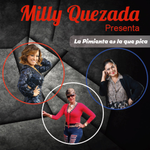
2017 · Single · 1 track