
Melodrama
2011 · Album · 11 tracks
Vicente García — Vicente Luis García Guillén, born in Santo Domingo on 30 March 1983 — is a Dominican singer-songwriter, guitarist and producer whose records fold bachata together with reggae, funk and rural Dominican folk forms, work recognised with three Latin Grammy Awards in 2017 and two more since.
A stolen guitar
The third child of the physician Vicente José García Siragusa, from a family of classical pianists, and the visual artist Ani Guillén Pelegrín, he took up a classical guitar he had borrowed without asking from an aunt at twelve and started writing songs. He grew up on a household record collection that ran from Herbie Hancock and Peter Gabriel to Robert Johnson, played Rage Against the Machine covers with friends as a teenager, and, at university, fell into reggae, funk and an outright obsession with Stevie Wonder.
«Calor Urbano»
In 2002, with Carlos Chapuseaux, Joel Berrido and Adolfo Guerrero, he formed the funk-soul band «Calor Urbano», which won several Premios Casandra and became one of the reference acts of the country’s alternative scene. Alongside the band he wrote more private songs — «No fue un milagro», «Más que ayer», «Para ti», «Me basta» — that spread informally online.
Turning to bachata
In 2008 Juan Luis Guerra 4.40 invited him onto his «La Travesía» tour, where he saw how Dominican music landed with audiences abroad and decided to work in bachata as a singer-songwriter’s form rather than a formula. He recorded his debut, «Melodrama» (2011), in Brooklyn with Rafael Lazzaro Colón for Capitol Latin/EMI, opening with the Motown-inflected bachata «Cómo has logrado» and including «Poquito a poquito», with Ximena Sariñana, and a reggae version of «Mi balcón» with Cultura Profética. Billboard praised the record, and Juan Luis Guerra 4.40 and Juanes — who called him “the Stevie Wonder of the new bachata” — endorsed it publicly; García went on to tour with Juan Luis Guerra 4.40’s «A Son de Guerra» and Maná’s «Drama y Luz», and Juanes brought him onto the Teletón Colombia and his own «Unplugged Tour».
Field recordings
When Capitol turned down the demos for a planned second album, «Te soñé» and «Mi yolita», García ended his contract and, for a time, considered leaving the stage to write for other artists — among them Mario Domm of the Mexican group Camila. In the summer of 2010 he took a course on the ethnomusicology of Dominican music with Sydney Hutchinson at the Centro León, and at the end of 2012 he travelled the provinces recording priprí, balsié and palo echao from the South, the Congos de Villa Mella from Mata los Indios, and Gagá, in a search that drew heavily on Luis "Terror" Días and the songwriter Juan Lockward.
Bogotá
A home piano-and-voice video of «Te soñé», never officially released, spread widely and rebuilt his audience from outside a label. In November 2013 he represented the Dominican Republic at the Circulart music fair in Medellín, and the concerts that followed in Bogotá and Medellín opened an independent chapter built on friendships with Colombian musicians — Santiago Cruz, Monsieur Periné, Juan Pablo Vega, Esteman, Manuel Medrano, Chabuco — that led him to move to Bogotá. A studio version of «Te soñé» followed in 2014, along with the «García - García» concert with Catalina García of Monsieur Periné in Mexico and «Tropical Filarmónica», a nine-musician show of Dominican and Caribbean standards in Santo Domingo. In 2015, after meeting the luthier Jesús «Cundengo» Minier in Mata los Indios, he wrote «Entre Luca y Juan Mejía», and that February he recorded «Nuestra Canción» in Puerto Rico with Monsieur Periné and the producer Eduardo Cabra — «Visitante», of Calle 13 — a collaboration that led Cabra to co-produce García’s next album.
«A la Mar»
Released in 2016 and produced with Cabra, «A la Mar» drew on around two dozen musicians from the Dominican Republic, Puerto Rico and Colombia and moved between bachata, reggae, priprí, gagá, the Congos de Villa Mella and folk; the Colombian group Los Gaiteros de San Jacinto appear on «Espuma y arrecife», and the Salve group of Mata los Indios closes the album on «Zafra negra». Mártires de León played guitar on «Mal de amores» and on «Bachata en Kingston», which fuses Jamaican dub with Dominican bachata guitar, and the artwork, by the Dominican painter Nadal Walcot, drew on Cocolo culture. The «A la Mar» tour ran through more than forty cities between 2016 and 2018, García recorded a Tiny Desk Concert for NPR Music in February 2018, and the Los Angeles Times later named the album one of the ten best Latin records of the decade. At the 2017 Latin Grammy Awards it won Best New Artist, Best Singer-Songwriter Album, and Best Tropical Song for «Bachata en Kingston».
«Candela» and after
«Candela» (2019), again produced with Cabra — his partner as well in the electronic project Trending Tropics — runs from the bachata-trap of «Ahí ahí» to the Taíno elegy «Maguá» and «Palm Beach», his first song in English. The Candela Tour reached the United States, Europe and Latin America through 2019. His music video for «Dulcito e’ coco» won Video of the Year at the 2018 Premios Soberano, «Camino al sol», from the 2022 album «Camino al Sol», won Song of the Year at the Soberano and then Best Folk Album at the 2023 Latin Grammy Awards, and «Puñito de Yocahú» (2025) won Best Contemporary Tropical Album at the 2025 Latin Grammy Awards. «Desde Otro Malecón» came out in 2023.
Legacy
García built a career out of treating bachata and Dominican folk forms — priprí, palo, gagá, the Congos de Villa Mella — as material for a singer-songwriter’s work rather than a fixed style, and carried that fusion from Brooklyn recording studios to villages in Villa Mella and back onto international stages, on the strength of five Latin Grammy Awards to date.
2011 · Album · 11 tracks
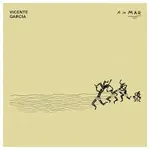
2016 · Album · 15 tracks

2019 · Album · 15 tracks

2025 · Album · 13 tracks
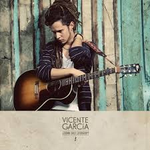
2009 · Single · 1 track
2010 · Single · 1 track
2011 · Single · 1 track
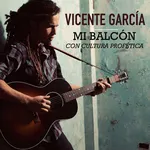
2011 · Single · 1 track
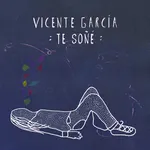
2014 · Single · 1 track
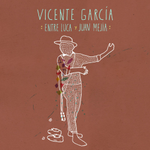
2015 · Single · 1 track
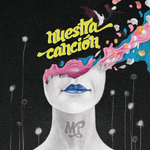
2015 · Single · 1 track
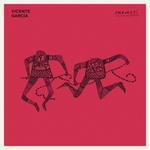
2016 · Single · 1 track
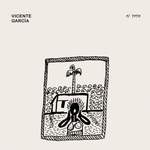
2016 · Single · 1 track
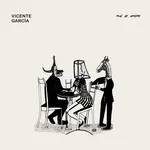
2016 · Single · 1 track
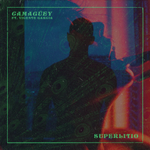
2017 · Single · 1 track
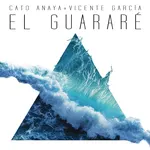
2017 · Single · 1 track

2017 · Single · 1 track

2017 · Single · 1 track
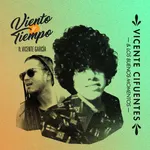
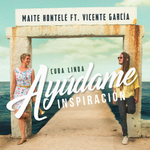
2018 · Single · 1 track
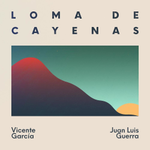
2018 · Single · 1 track

2018 · Single · 1 track
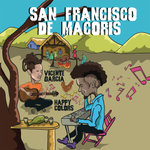
2018 · Single · 1 track

2018 · Single · 1 track

2018 · Single · 1 track
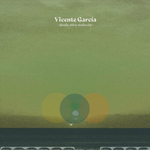
2023 · Single · 3 tracks
2022 · EP · 5 tracks